Questions and Answers
What are the changes for double cab pick-up trucks?
I own a pick-up truck for my business and I am not sure if the tax changes from April will affect me – what is changing?
Last updated 22 Apr 2025 | First published 15 Feb 2024
By Catherine Heinen, FCCA 1 min read
In short, classification of double cab pick-ups (DCPUs) from April 2025 will change.
Currently, when classifying a double cab pick-up as a car or a van, the main consideration is the payload* of the vehicle. A double cab pick-up** that has a payload of one tonne (1,000kg) or more is accepted as a van for benefit in kind and capital allowance purposes. Any DCPU under one tonne is classified as a car.
From 1st April 2025, the changes in classification of DCPU means that most double cab pick-ups will now be classified as cars, because they are suited to carrying passengers.
The changes mean that under benefit in kind rules, the company car rules would have applied, rather than the flat rate benefit value for vans. Typically, company car benefits give rise to higher tax liabilities for employees and employers.
If you already own a DCPU, then transitional rules will apply meaning its current treatment will apply until the earlier of:
- Disposal date
- Date of lease expiry
- 5th April 2029
The changes do not affect single cab pickups.
* Payload means gross vehicle weight less unoccupied kerb weight.
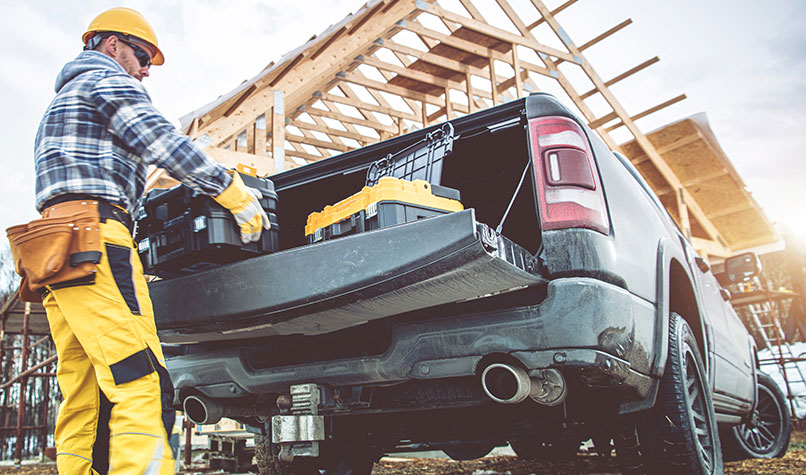
** A double cab pickup normally has a front passenger cab with a second row of seats, seating five people. It has four doors capable of being opened independently and an uncovered pickup area behind the passenger cab.
Frequently Asked Questions
Double cab pickups used to be treated as vans, which meant a low value for benefit in kind (BIK) tax for employees if they were provided with them by their employers. But since 6th April 2025 they have been treated as cars. In most cases this means a much higher tax cost for the employee and higher class 1A national insurance contributions for the employer.
Last updated 22 Apr 2025 | First published 15 Feb 2024
This article is intended to inform rather than advise and is based on legislation and practice at the time. Taxpayer’s circumstances do vary and if you feel that the information provided is beneficial it is important that you contact us before implementation. If you take, or do not take action as a result of reading this article, before receiving our written endorsement, we will accept no responsibility for any financial loss incurred.

Catherine Heinen, FCCA
Catherine is a qualified accountant and technical content writer with experience working at mutliple accountancy practices in the UK top 50 accountancy firms according to Accountancy Age. Catherine has significant experience in accounts, tax returns and advising clients. Catherine ensures businesses, business owners and individuals are kept up to date and informed by providing concise and informative technical material.
Choose the right accounting firm for you
Running your own business can be challenging so why not let TaxAssist Accountants manage your tax, accounting, bookkeeping and payroll needs? If you are not receiving the service you deserve from your accountant, then perhaps it’s time to make the switch?

Local business focus
We specialise in supporting independent businesses and work with 100,000 clients. Each TaxAssist Accountant runs their own business, and are passionate about supporting you.

Come and meet us
We enjoy talking to business owners and self-employed professionals who are looking to get the most out of their accountant. You can visit us at any of our 393 locations, meet with us online through video call software, or talk to us by telephone.

Switching is simple
Changing accountants is easier than you might think. There are no tax implications and you can switch at any time in the year and our team will guide you through the process for a smooth transition.